Sorry it’s been a while, everyone, but we’re not quite sure what happened this summer, and as a result, we’re halfway through the Greatest Rivalry Tour without really registering it. Admittedly, we had our reservations about the whole thing from the outset, and many of them haven’t gone away. Nevertheless, there is no denying the gravity of the history between these two sides, and as an exercise in nostalgia, it has been entertaining at times. So two Tests in we can’t deny that it’s held our attention even if some of the games leading up to the Tests haven’t quite cut it, with perhaps the exception of the Lions and Stormers games providing the kind of thrills that the Tours of old used to produce by the bucketload and which have been a large part of the rationale for reinventing this kind of old school Tour between the two fierce rivals. So this week we’ll share our impressions of the experience so far, in light of what lies ahead for the Final Two Tests.
Meanwhile, Canadian Test Rugby, in both the Men’s and Women’s programmes, is very much back on the radar. The Men will play in a slightly altered version of the annual Pacific Nations Cup in September; once again, why it had to be tinkered with, we’re not sure. Then in November they head to Europe for the conclusion of the Rugby Nations Cup. Meanwhile, and to the huge excitement of Rugby fans in Canada, the Women start their WXV campaign, with games against Scotland, England and France in Europe followed in October by the two hugely anticipated games against England here in Canada, first in Toronto and then Ottawa, with both games set to break attendance records for a Women’s game in North America.
Finally, we’ve had a chance to have a look at Australia under new management in the shape of Les Kiss, who has taken over the reins from Joe Schmidt a year out from the World Cup. As anyone who reads our misguided musings regularly knows, we are not fans of changing the Coaching box at such a critical juncture in a team’s World Cup cycle, but Australia appears to have decided to throw caution to the wind. In fairness, it was inevitable, as Schmidt made it clear that, for personal reasons, he could not fulfill a full 4-year tenure. Consequently, Kiss has been thrown in at the deep end, with Australia’s performances before his arrival leaving much to be desired. In his opening three matches in charge, Australia wobbled against Japan but then found a way to dispatch their hosts with ease a week later. They now face a tough two-match tour of Argentina but will take heart in how they stood up to a Pumas side that threw the kitchen sink at them in Jujuy last Saturday. These two Tests will be excellent preparation for the more daunting two Rounds of the Bledisloe Cup with New Zealand, which lie ahead of them at the end of September. It’s still very early days, but Australian supporters should feel there are reasons to be optimistic ahead of what should be a punishing Test this weekend in Mendoza against Argentina.
So without any further ado, here are our thoughts on the proceedings of the last few weeks. Whether you find them valid or preposterous is your call, but hopefully they’re worth generating some idle banter with your mates over a pint or two at your local watering hole.
The Greatest Rivalry Tour is heavy on spectacle, but is it really delivering on its promise?

While we respect one of International Rugby’s most fabled rivalries, and certainly the first two Tests, especially the second one in Cape Town, have lived up to the history they are trying to recreate, the organization around it all and some of the desperate attempts to create a spectacle have left us rather cold.
In order to focus on what is important, the rugby, let’s get the negatives out of the way first. As everyone knows, we fail to understand the reason for four Tests, especially given the fourth Test is being played in the US and could potentially result in the Series being a draw, which would be the most unsatisfying and inconclusive outcome possible. If you are trying to recreate the magic of Tours of old, then all Tests were played in either South Africa or New Zealand, and in a format that could clearly determine who was best. Consequently, for us here at the Lineout, the Series is decided next Saturday in Johannesburg regardless of what happens in Baltimore a week later. Whichever side wins this weekend, with the Series drawn at 1-1, claims bragging rights as the best of two extraordinarily talented sides with a huge history until the next Rivalry Tour in New Zealand. The Baltimore fixture is simply a money-grabbing sideshow with no influence on the status of the two sides’ rivalry as far as we’re concerned – what matters is who wins the most Tests in South Africa.
Finally, the media has said a lot about it, and while it is not really the preserve of this blog to discuss aviation safety, we still have to get it off our chests. We all remember the historic flyover of the South African Airways 747 over Ellis Park in the 1995 World Cup Final with “Go Bokke” emblazoned on the belly of the aircraft. It’s an image that will live with Rugby Fans lucky enough to witness it either live or on their TV screens as one of the game’s great iconic moments. Since then, it has become a bit of a tradition in South Africa for big Test matches, and we totally respect that and, like everyone else, thoroughly enjoy it. However, it’s always been done at a safe altitude; the original flight back in 1995 was a good 200 feet above a packed stadium. Saturday’s stunt in Cape Town was not and simply came across as reckless and foolhardy, and could have ended in disaster as the lead aircraft passed a mere 46 feet over the roof of the stadium. One of our crew here at the Lineout, a pilot with over 25 years of bush/corporate/airline flying, was horrified, especially having spent five of those years flying out of Cape Town himself. While he has the utmost respect for South African pilots and their flying skills, Saturday’s stunt left absolutely no margin for error and could have resulted in a horrific accident. It didn’t, thank heavens, but two of the best sides in the world and the 60,000 fans present didn’t deserve to be exposed to that kind of risk. It sadly didn’t paint a good picture, in our opinion, despite the “wow” factor, and instead looked like a reckless, sensationalist act to boost viewing numbers, more suited to teenager-driven shock TikTok videos than an internationally broadcast major professional sporting event. We sincerely hope that it won’t be repeated this weekend.
So now we’ve got the elephants out of the room; let’s talk about what really matters: the rugby. The matches against the Club/franchise teams, a staple of Tours of old, have been a mixed bag. The opening Test in Cape Town against the Stormers was a pulsating affair that kept our interest for the first hour and lived up to the traditions of old. The next two fixtures against the Sharks and the Bulls, however, did not. In the Sharks game, it was a seriously depleted Sharks side, not helped by absolute freak weather conditions for Durban, which made the game almost unplayable and instantly forgettable. The Bulls also suffered from a lack of key personnel, and the game also was one that won’t be on anyone’s highlight reels. Imagine then our surprise and absolute delight in watching the Lions game, which we feared would simply be more of the same dross filler to pad out the Tour. It was an absolute cracker of a game, with the youth and exuberance of the Lions (or perhaps next-gen Springboks based on that performance) punching massively above their weight and giving us 80 minutes of blockbuster entertainment and almost a place in the history books.
As for the Tests themselves, they have so far proven to be what everyone hoped they would – massive contests between two fierce rivals. The Springboks in the first Test clearly struggled to find their rhythm against an All Blacks side that is really starting to hum under new Coach Dave Rennie. New Zealand’s legendary attacking game, played at 300 miles an hour, was on full show at Ellis Park, and South Africa simply failed to cope despite initially looking like the dominant side. Once New Zealand hit their straps, South Africa struggled at times to get their defensive structures right at key moments, and we all know what New Zealand will do to you if you give them any kind of space to play in.
Consequently, the Springboks arrived in Cape Town with a point to prove. Despite Airlink’s best attempts to take out the All Blacks team and their supporters before the game even got started, South Africa were determined to let their rugby do the talking. We think it’s safe to say they got the job done and then some, but the calibre of both sides made it far from comfortable for much of the match. However, South Africa played a smart game that played to their strengths and made New Zealand do all the hard work, even if the last quarter had everyone on the edge of their seats – which is the essential quality of a great Test match.
At times, the two teams are polar opposites in how they view the game and how it should be played. South Africa are comfortable without the ball but brutally effective with it in the red zone when they do get it, while New Zealand are much happier and more successful when they keep the ball to themselves and starve their opponents of possession. Unlike in the first Test, South Africa’s defence put New Zealand’s attack under constant pressure, and despite a significant number of missed tackles by the Springboks, it was solid enough to force the All Blacks into mistakes when it mattered most. Sure, the All Blacks outscored the Springboks 4 tries to 3, but the Springboks’ decision to kick for points made the scoreboard pressure on the All Blacks exhausting and ultimately the telling difference. The rise of Cheslin Kolbe to the role of the Springboks’ most reliable asset off the tee in the space of a mere few months has been remarkable. After taking 11 pressure kicks this Tour and not missing any of them, Kolbe finds himself amongst legends like Carter, Wilkinson, Sexton, Ramos and the like – cool as a cucumber is an understatement of note.
Despite the Springbok defensive wall and its utterly energy-sapping effect on opposition teams, South Africa won’t be happy that over the first two Tests they’ve managed only a 75% tackle success rate, compared to the All Blacks’ 82%. The statistics over the first two Tests also show that New Zealand pass the ball significantly more than South Africa, but the Springboks carry it much more. In the second Test, the All Blacks passed the ball an extraordinary 248 times compared to the Springboks’ paltry 93 passes. South Africa, however, had the edge in kicking for territory and turning the ball over at key moments, with Hooker Malcolm Marx making critical interventions in this area when he came off the bench. Of South Africa’s 6 turnovers compared to New Zealand’s 2, Marx was responsible for 3.
So who’s stood out for us so far? In the Springbok camp of the old guard, Deon Fourie and Malcolm Marx have been exceptional in the Hooker role, despite the former being very much at the swansong of his career. South Africa’s most effective enforcer to probably ever wear the green and gold, Eben Etzebeth, was at his very best in Cape Town, while Pieter-Steph du Toit’s name will be spoken in reverent whispers for centuries to come (though we’ve been doing so since the first of his 100 Springbok caps). Ox Nche has been the power and quiet fury essential to the Springbok front row, along with Thomas du Toit.
Of the new bloods, Ruan Nortje has now proved utterly indispensable to the Springboks’ second row and was the mastermind of so many of the All Blacks’ lineout issues in the second Test, and the more South Africa sees of back rower Cameron Hankeom, we imagine the happier they will be. Ethan Hooker has finally developed into the potent winger we always knew he would be, and some of his defensive efforts in Cape Town were crucial in keeping New Zealand’s attacking threats out wide in check. Like we say, it wasn’t a perfect performance, but the Springboks have a lot to build on for the third and final Test in South Africa (and for us, the Series decider); it should be one for the ages.
However, New Zealand should feel equally optimistic after the first two Tests as they head back up to Johannesburg. In Ardie Savea, they have probably the greatest number 8 to ever grace the black jersey, while Will Jordan is probably the world’s greatest all-court winger, with perhaps only France’s Louis Bielle-Biarrey able to match his extraordinary talent and use of space. Dutch import Fabian Holland is already well on his way to being able to dine at the same All Black second rowers’ table as the likes of Ian Jones and Sam Whitelock, and we’d argue that Simon Parker and Luke Jacobson are quietly developing a formidable back row partnership. Enough has already been said about scrum half Cam Roigard. However, that is probably still only scratching the surface of the Hurricanes number 9’s exceptional talent. We feel that Leroy Carter may not have the all-court game of his colleague on the other side of the park, Will Jordan, but as an attacking threat for the next World Cup, any opposition will need to figure out a defensive structure to keep him in check.
So in conclusion, have we answered our initial question of whether this Greatest Rivalry Tour has delivered on its promise? Barring some frustrations and irritations, and overlooking some of the mismatches leading up to the first two Tests, we’d argue yes. Of the games against the four South African provinces, last Tuesday’s clash with the Lions was one of the most fun games we’ve seen all year and had us on our feet from start to finish. Last weekend’s second Test was the all-out classic hand-to-hand combat and breathless moments of genius that these two sides have built their reputation on. In short, it was Test rugby played by two of the finest practitioners of the art at full throttle. More of the same this Saturday, please, in what is, for all intents and purposes, the Series decider!
South Africa vs New Zealand – Saturday, September 5th – 11:00 AM (Eastern) – Premier Sports and Stan Sport Australia (live and on demand)
Canadian International Rugby is back, and the next three months are probably the most exciting opportunity there has ever been to showcase Men’s and Women’s rugby in this country and hopefully grow interest in the game!

If you’re a Canadian rugby fan, then there is plenty to get excited about over the next few months. For both the Men and Women, it’s an almost unprecedented 3 months of non-stop Test action against quality opposition. There’s all the usual fuss about how much of it we’ll actually get to see here in Canada, but for the most part you should get to catch most of the action.
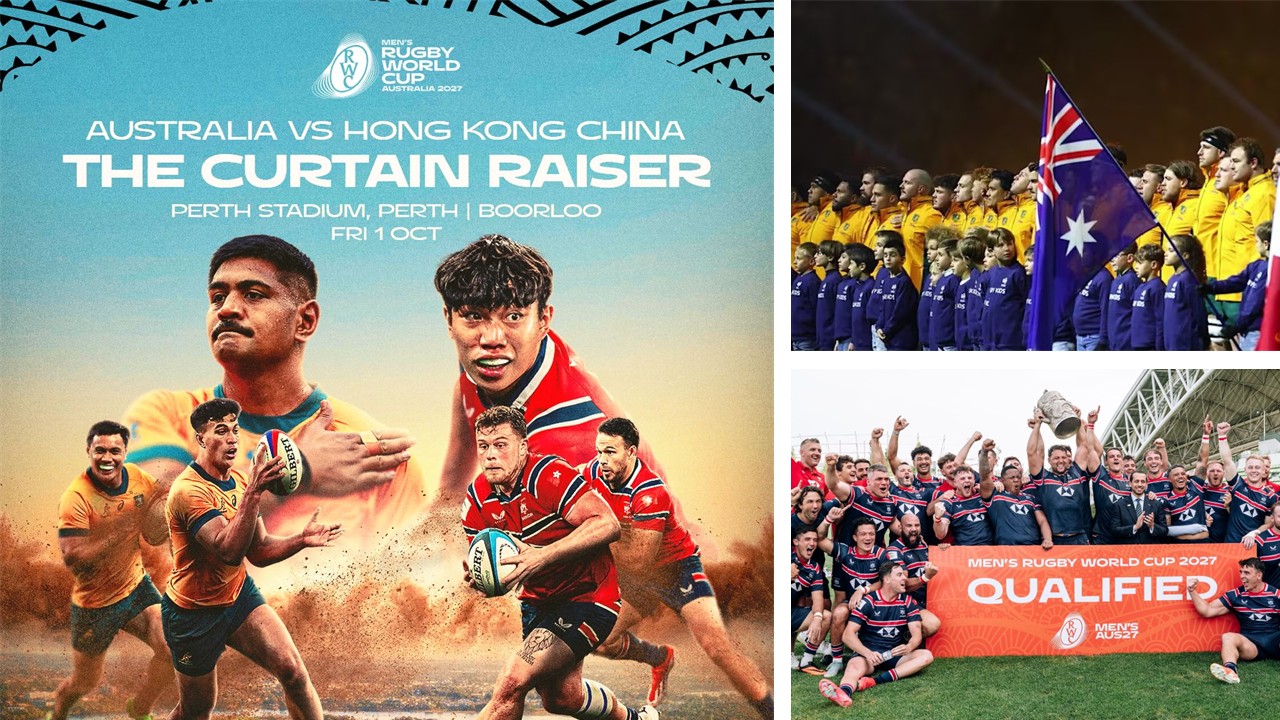
As mentioned above, the Men get us going this weekend, with a friendly against Japan as a precursor to an abbreviated Pacific Nations Cup. Like we’ve said in previous posts, the Pacific Nations Cup has a slightly bizarre format this year, as Canada’s first game in the competition is a Semi-Final against Fiji on September 12 without actually playing any pool games – go figure. The whole tournament is being played in Japan, consisting of a semi-final weekend between the USA, Fiji, Canada and Japan, a 3rd- and 4th-place playoff, and an actual Final the following weekend. Still, it’s all good preparation for what lies ahead of the boys in November for the final three Rounds of the Rugby Nations Cup in Europe, followed by the Finals weekend. Canada has no easy games in November; even the game against Hong Kong, China, which should have been their best bet for a win with both teams playing away from home, is now no certainty after Hong Kong beat Uruguay in July on Los Teros’ home ground in Montevideo. There were certainly glimmers of hope this July in the opening Rounds of the Rugby Nations Cup to think that Canada’s men may finally put their previous Autumns of Discontent to rest and start optimistically building towards a brighter future.
However, it’s the Women’s schedule starting this month that has really got us buzzing. As you all know, they will be playing World Champions England not once but three times in a rematch of last year’s World Cup Final, with two of those games being on home soil in Toronto and Ottawa. Sellout crowds are already looking to be the order of the day – so if you haven’t got your tickets yet, then get on it and make sure we give our fabulous ladies the loud and vocal home support they have earned and deserve!
As you may recall, we initially bemoaned the fact that Canada were heading into this WXV tournament set of fixtures slightly underprepared compared to England’s schedule. However, we are delighted to announce that before the first Test against the Red Roses in Exeter, they play Scotland followed by France after the England game. They then return to Canada for the two Tests against England. Make no mistake, facing the Red Roses is an exceptionally daunting task, but breaking England’s extraordinary 38-game winning streak is not beyond the realm of possibility, especially here on home soil in front of a passionate crowd. It’s a tall order, but this group of players certainly has the cohesion, commitment, skill and drive to pull it off if the chance presents itself.
For the Women’s games, TSN should cover all the action and is also likely to come to the party for the Pacific Nations Cup proper and the conclusion of the Rugby Nations Cup, but we’ll keep everyone posted on the TV page. This weekend’s game against Japan is being shown on TSN Premium, which used to be called TSN+.
Japan vs Canada – Saturday, September 5th – 1:36 AM (Eastern) – TSN Premium (live and also hopefully on demand)
Australia’s new Coach dips his toes into International waters, and so far it looks like the Wallabies may be able to do more than just tread water

It’s still far too early to judge how effective Les Kiss is as the new Wallaby Coach, but after last weekend there are reasons to be cautiously optimistic. Admittedly, much of this depends on the stretcher-bearers staying on the sidelines and away from the Wallabies’ limited depth, and on Australia getting over their traditional end-of-year crisis of confidence. We’ll be honest: we found it hard to be positive after the Wallabies’ first outing with Kiss against Japan, which resulted in an intensely laboured 35-32 win for Australia and certainly didn’t put our minds at rest.
However, in the second Test against Japan, an emphatic 56-17 win for the Wallabies, Australia looked a lot more assured. In Carter Gordon, they seem to have finally found the missing link at fly-half, though there is that nagging concern that the highly capable Reds number 10 has a troubling history of injury woes. In Carlo Tizzano, they have a fast, mobile wrecking ball capable of complementing the power, pace and genius of Fraser McWright and Rob Valentini in the back row. Ryan Lonergan is starting to look the part in the nine jersey. At the same time, Max Jorgenson continues to impress in the backs along with the exceptional Tom Wright, who seems to be slowly but surely getting back to his best after his return from injury.
Australia now faces a second Test against the Pumas in Argentina after surviving a nervy and intensely physical win in the first Test. Australia were the better side for much of the match, but there were moments, especially in the second half, when Argentina looked well on their way to crushing the Wallabies’ fragile confidence. However, the Pumas sadly seem to be their own worst enemy at the moment, with their actual opponents being the least of their worries. Nevertheless, when it clicked for Argentina last weekend, they looked exceptionally dangerous, and as the game wore on, they started to rise to the task with some terrific attacking play.
Consequently, the Wallabies can expect a much stiffer challenge this Saturday in Mendoza. Australia, however, will take comfort in the fact that Mendoza is not a particularly happy hunting ground for the Pumas, and in all three encounters between the two sides on said ground, Australia has emerged victorious. Still, as Argentina’s last hurrah before the Rugby Nations Championship in November and a winning streak by Australia on a cherished home ground needing to be broken, spare a thought for Les Kiss and his charges in what is likely to be a punishing and bruising encounter. If ever there was a need for cometh the hour, cometh the man, then 6 PM in Mendoza this Saturday will be it and Les Kiss’ biggest Test of character and ability to date!
Argentina vs Australia – Saturday, August 5th – 5:00 PM (Eastern) – Premier Sports and Stan Sport Australia (live and on demand)
Well, that’s it for now, folks. Enjoy what should be a powerhouse Saturday in both Johannesburg and Mendoza, and, time permitting, much more to come from us in the weeks to come.
































 The Lineout